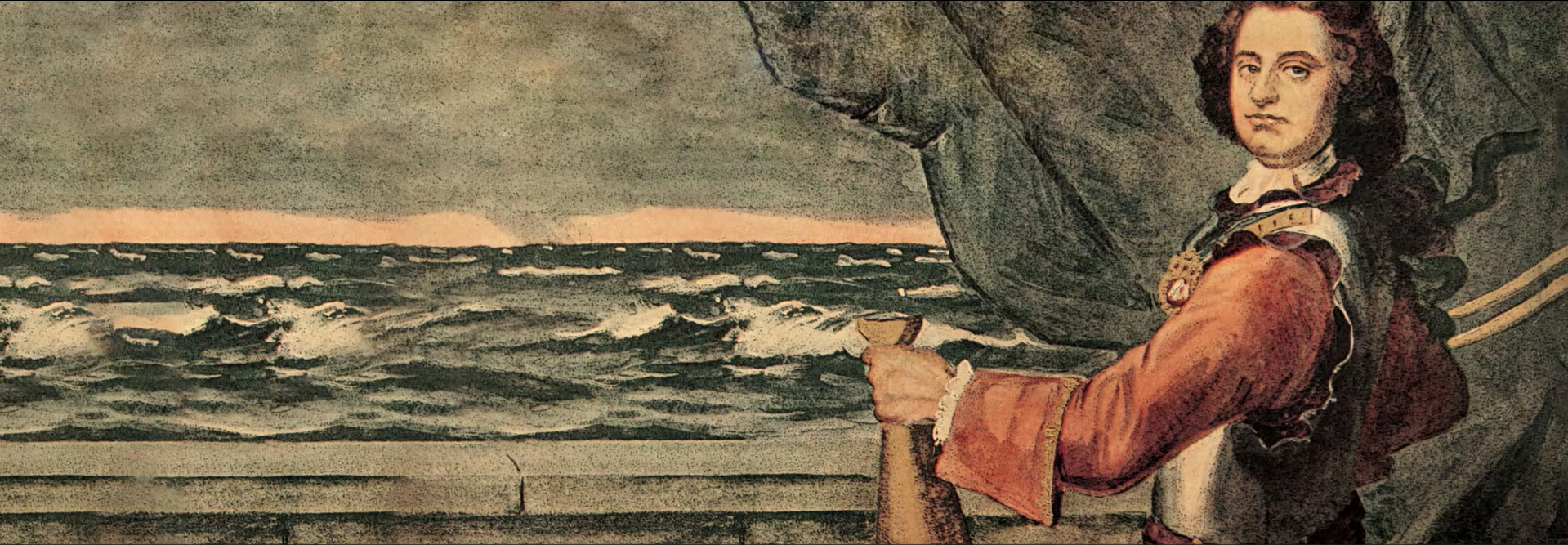
ABOUT TORDENSKJOLD
(October 28, 1690 – November 20, 1720)
This is the story of how Tordenskjold ended up on
Denmark's most popular matchboxes.
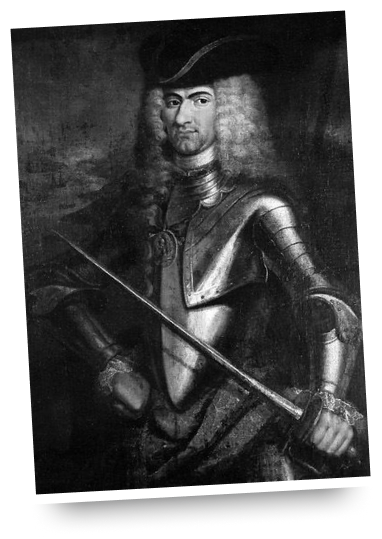
DANISH/NORWEGIAN VICE ADMIRAL AND NAVAL HERO
Peter Jansen Wessel was born in Trondheim—which at that time was part of Denmark—on October 28, 1690, and grew up in a wealthy merchant family, the 14th of 18 siblings. It is said that as a child he was completely unruly and constantly involved in trouble and fights. In order to teach the boy some manners, his father allegedly placed him in the apprenticeship of a strict tailor, but this did not have much effect.
In 1704, King Frederik IV traveled to Norway, arriving in Trondheim on July 26 with a large entourage. When he sailed home again, the young Wessel was reportedly on board as a stowaway. The story may well be true, but it cannot be verified. The man and the myth tend to merge in the case of Tordenskjold, and because he had a well-developed talent for self-promotion and drama, it is often difficult to determine what is fact and what is fiction. In any case, he accompanied the king to Copenhagen.
PETER WESSEL MAKES A LIGHTNING CAREER
Peter Wessel had ambitions to join the navy. Therefore, in 1706, he applied to the king to be accepted as a midshipman. The application was rejected because of Tordenskjold's age (he was only 16 at the time), so he signed on to the West India Company ship Christianus Quintus, which sailed to Guinea and the West Indies in 1706–08. Upon his return, he sent a new application to the king and set sail again on a long voyage. When he returned home in 1710, he received the good news that he had now been accepted as a midshipman. In the meantime, war had broken out between Sweden and Denmark-Norway.
Although Wessel was only 20 years old, he was already an experienced sailor when he started at the Naval Academy. In the spring of 1711, he served as second in command on the frigate Postillon, and in July of the same year, he was appointed second lieutenant. Shortly thereafter, he was given command of the five-gun sloop Ormen, and in May 1712, he became captain of the frigate Løvendals Galej, a 20-gun ship. Later that year, he was promoted to lieutenant commander.
COURAGE AND HUMOR
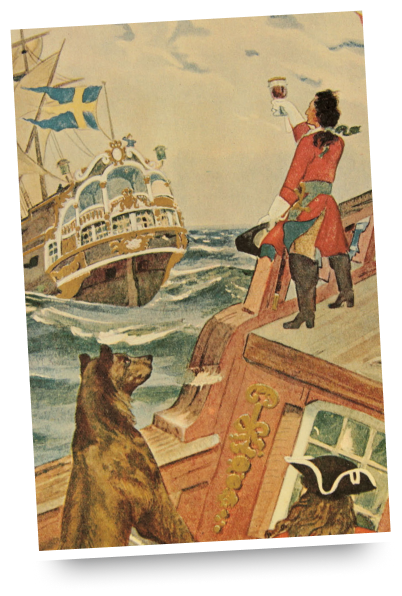
Peter Wessel was not the type to ask permission first; he acted first and took the blame or credit afterwards. On August 12, 1713, he wrote a letter to the governor of Gothenburg mocking the Swedes for allowing their privateers to attack merchant ships instead of fighting real warships. And to add insult to injury, he urged the governor to send a ship after him, since a reward had been offered. The governor did not share Wessel's sense of humor and complained about his insolence to the commander-in-chief in Norway.
The end of the story was that Peter Wessel was reprimanded by the king. On July 26-27, 1714, he was engaged in battle with a Swedish frigate. The battle came to an abrupt halt when Peter Wessel ran out of gunpowder and bullets, and because weather conditions made boarding impossible. He informed the enemy of the situation and suggested that they each sail their own way. The two ships then ran alongside each other, the crews drank to each other's health and shouted hurrah, after which they sailed their separate ways as suggested. This cost Tordenskjold a trip to court martial. Wessel was acquitted, but not only that, shortly afterwards he was appointed captain.
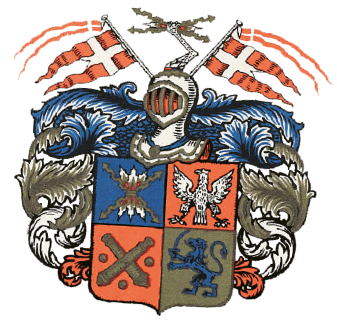
PETER WESSEL BECOMES TORDENSKJOLD
In 1715, Peter Wessel defeated a small Swedish fleet in the Kattegat and captured the ship Hvide Ørn. As a reward for his efforts, he was appointed captain of the ship. During the battle at Rygen on August 8, 1715, he distinguished himself once again, and in October of the same year, he engaged in battle with a Swedish ship of the line and a frigate. Despite being vastly outgunned, he managed to chase the Swedish ships away.
For this heroic deed and many other merits, Peter Wessel was knighted on February 24, 1716, under the name Tordenskjold, at only 25 years of age.
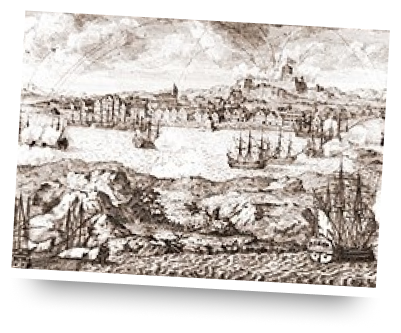
The Battle of Dynekilen
On July 4, 1716, the Swedish king, Charles XII, invaded Norway with a large army. A Swedish supply fleet was therefore on its way to the narrow Dynekilen fjord, between Strømstad and Iddefjord, to the besieged Danish fortress at Frederiksten. Early in the morning of July 8, 1716, Tordenskjold and his forces entered the fjord and surprised the Swedish fleet. By the end of the sea battle, Tordenskjold had destroyed the entire Swedish supply fleet of 25 ships.
He was promoted to commander and commander-in-chief of the Kattegat squadron, and he and his ship captains were awarded a gold medal. On December 19, 1718, Tordenskjold heard rumors that Charles XII had died during the siege of Fredriksten. The rumor was confirmed, and he immediately traveled to Copenhagen, where he was the first to break the news to Frederick IV. As a token of gratitude, he was immediately appointed rear admiral.
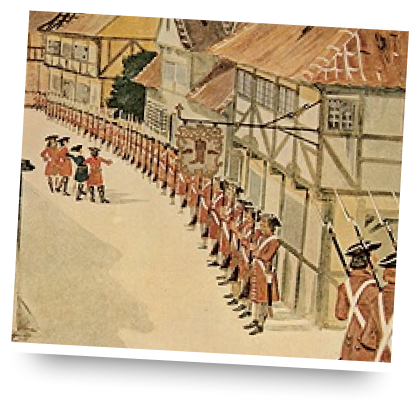
TORDENSKJOLD'S SOLDIERS
On July 23, 1719, Tordenskjold launched a devastating attack on the Swedish Gothenburg squadron, which was stationed in Marstrand. He then laid siege to the city and its fortress, Karlsten. Through negotiations, Tordenskjold persuaded the fortress commander to surrender. This is where the expression "Tordenskjold's soldiers" comes from. What broke the Swedish commander was that Tordenskjold had enormous strength in the city. But it was a bluff – he had his soldiers march in circles to make it look like there were far more of them than there actually were. That is why we use the expression today when we see the same few people over and over again in different contexts.
Unfortunately, this story cannot be confirmed by historical sources and is most likely a myth. However, considering Tordenskjold's other achievements, the story could just as well be true. Frederik IV appointed Tordenskjold vice admiral and presented him with a portrait of the king in a frame set with diamonds. As a special gesture, Tordenskjold was allowed to wear the portrait on the blue ribbon of the Order of the Elephant.
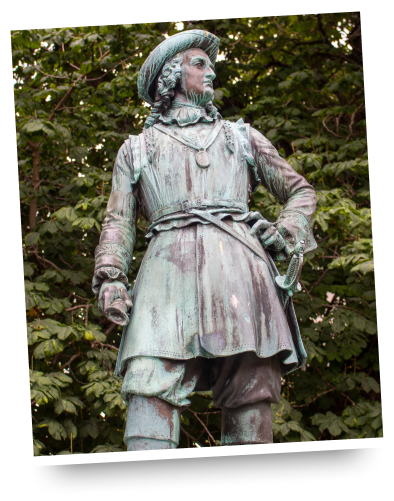
THE DEATH OF THE SEA HERO
When peace was concluded in July 1720, Tordenskjold was given permission to travel abroad, and he immediately left for Germany.
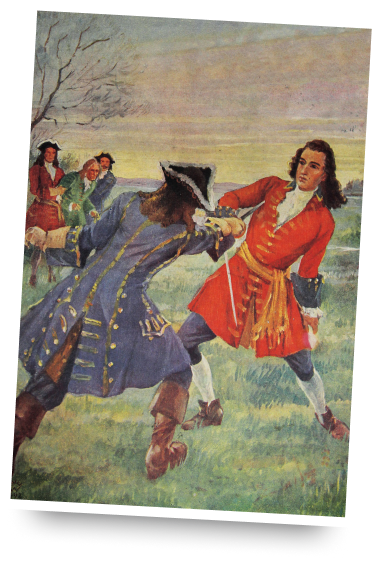
During his stay in northern Germany, he had heard that an acquaintance of his, Abraham Lehn, had been cheated by card sharps in Hamburg. At a party in Hanover on November 9, 1720, Tordenskjold entertained his guests with this story.
A colonel who was present, Axel Jacob Stäel von Holstein, introduced himself as one of the alleged cheaters, denied having cheated, and demanded an apology. The dispute ended in a scuffle, and the colonel demanded redress in the form of a duel. The duel was fought with swords on November 12 and ended with Tordenskjold being killed by a stab to the chest. He died at the age of 30 and was laid to rest in Holmens Church in Copenhagen. His sarcophagus and memorial plaque can still be seen there today.
TORDENSKJOLD'S 150TH ANNIVERSARY
Part of Danish hygge since 1865.
When we celebrated the 150th anniversary of the first Tordenskjold matchbox in 2015, we published a comprehensive anniversary booklet with lots of exciting stories about the old naval hero and about match manufacturing then and now.